Industrial battery recycling supports supply security and sustainable resource use. With complementary portfolios, Primobius and SMS group support customer-specific recycling solutions. The focus is on flexibility, scalability, and long-term viability.
A vast array of battery types
In recent decades, hundreds of different battery types have been launched on the market. The main types can be broadly categorized into the following groups:
- Lead-acid batteries are commonly used in automotive applications.
- Nickel-based batteries come in two main varieties: nickel-cadmium (NiCd), which are known for their durability and ability to perform well in extreme temperatures, and nickel-metal hydride (NiMH), which have a higher capacity and less environmental impact.
- Lithium-based batteries are used for various applications. Lithium-ion (Li-ion) batteries are prevalent in consumer electronics, electric vehicles, and renewable energy storage. Lithium iron phosphate (LiFePO4) batteries are noted for their safety and long life, while lithium polymer (LiPo) batteries offer high energy density and flexible form factors.
- Alkaline batteries are commonly found in household items, for example remote controls and flashlights, and are typically non-rechargeable.
- Flow batteries are suitable for large-scale energy storage systems, with types including vanadium redox flow and zinc-bromine flow.
Although each type of battery has its own specific applications, advantages, and limitations, they all have one thing in common. Batteries are highly complex products, which are characterized by a diverse and functional combination of metals and other materials that have to be “unmixed” during metallurgical processing in a cost-effective way. As a result, this calls for sophisticated recycling processes, starting with mechanical separation and followed by the most suitable, economically viable combination of pyro- and/or hydrometallurgical processes.
Multi-stage hydrometallurgical battery recycling solutions from Primobius
Battery recycling requires a combination of process stages. Primobius designs and delivers integrated, multi-stage battery recycling plants, covering the safe discharging and dismantling of lithium-ion batteries, the mechanical separation, including economically friendly wet shredding as well as the highly efficient chemical refining via hydrometallurgical processes. Primobius hydrometallurgical plants meet diverse customer challenges, accepting flexible battery feed, and ensuring safe, robust operation and high metal recovery, offering readily saleable by-products at minimum operating cost.
The recycling processes are tailored to customer requirements focusing on industrial-scale solutions, operational reliability, and offering high flexibility. Primobius plants are designed for long-term operation and future adaptation.


SMS group's pyrometallurgical solutions
SMS offers solutions for recycling all of the battery types described. Choosing the best recycling process for batteries and accumulators depends greatly on the amount and on the chemical and physical properties of the input material, as well as the location. The pyrometallurgical process route is best combined with hydrometallurgical steps, separating the individual metals from a multiple metals regulus to produce high-quality battery precursor material.
Pyrometallurgical technology such as the BlueSmelter, TBRC (top blown rotating converter), electric smelters, and the Kivcet furnace are typical melt production techniques. SMS group is also developing a solution that combines pyro- and hydrometallurgical steps for recycling complex metal-bearing materials, including lithium-ion batteries. The advantage of this new process route is that it offers more flexibility when processing rapidly changing battery chemistries.
Reference project in Germany: Integrated battery recycling for Mercedes-Benz
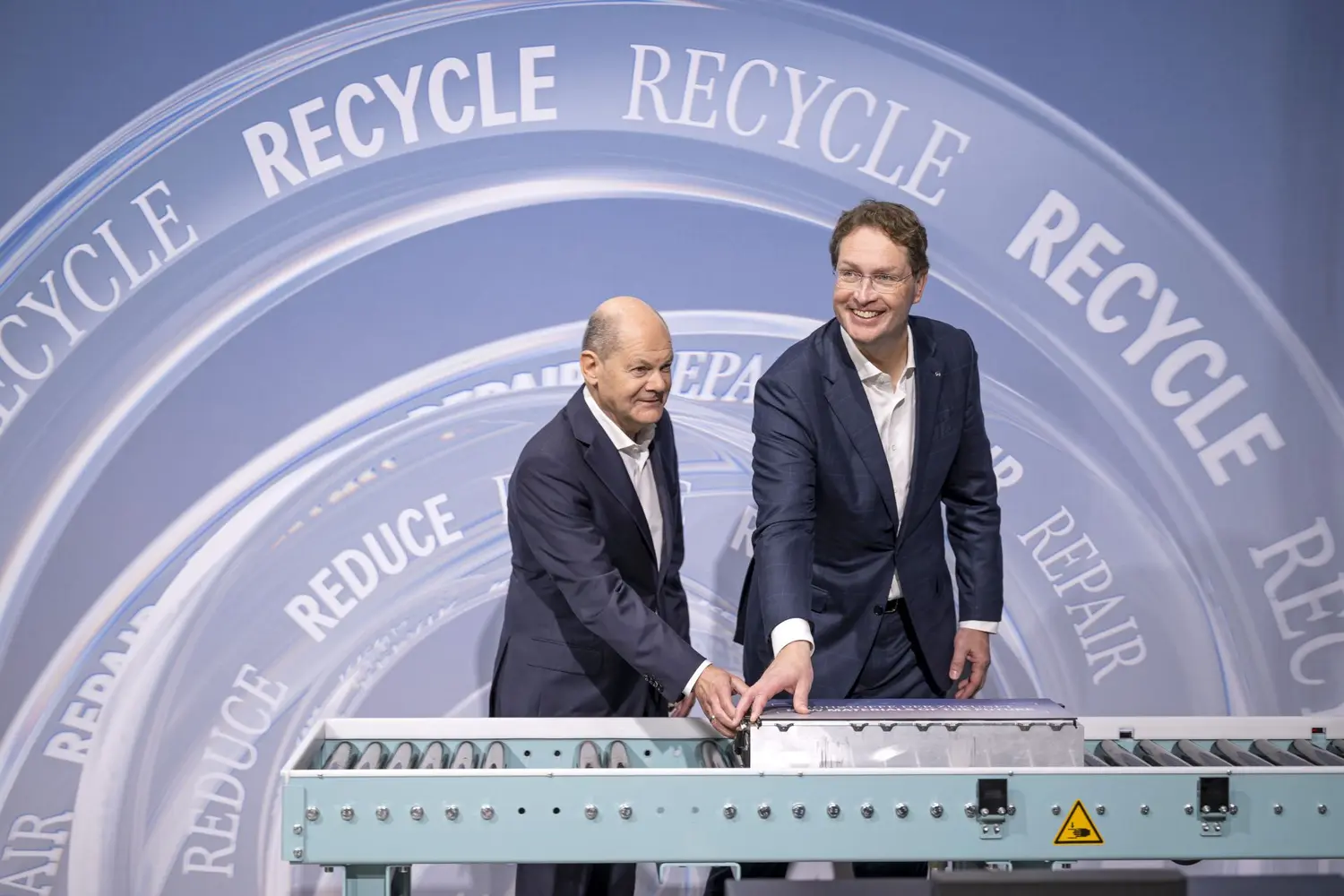
Primobius developed an integrated battery recycling plant for Mercedes-Benz in Germany. The project supports Mercedes-Benz’s strategy to establish circular value chains for battery materials. The integrated recycling plant is designed to enable the recovery of valuable raw materials and strengthen supply security.
In October 2024, the project reached an important publicly marked milestone. This milestone highlighted the transition from project development to on-site implementation. Since then, the plant has progressed through installation and commissioning activities. Preparations for industrial operation are ongoing.
The project demonstrates the realization of an integrated, multi-stage battery recycling concept at industrial scale. It underlines Primobius’ role as an experienced plant engineering and integration partner.