Test stand for pressure reactions and component tests
Before process technological equipment can be implemented on an industrial scale, the materials and components have to be tested for their up-scaling capacity. Also the automation and control sequences have to be verified beforehand. Such tests can be performed in a highly flexible test stand that is even suitable for tests with aggressive media. The stand features indirect heating and its own PLC for simulating process sequences. It can be used to examine specific reactions under pressure, which may be useful for hydrometallurgical processes. In this way it is possible to determine the relevant process parameters and identify the engineering requirements for hydrometallurgical plants. The tests are performed in indirectly heated pressure reactors of both lab and test field scale.
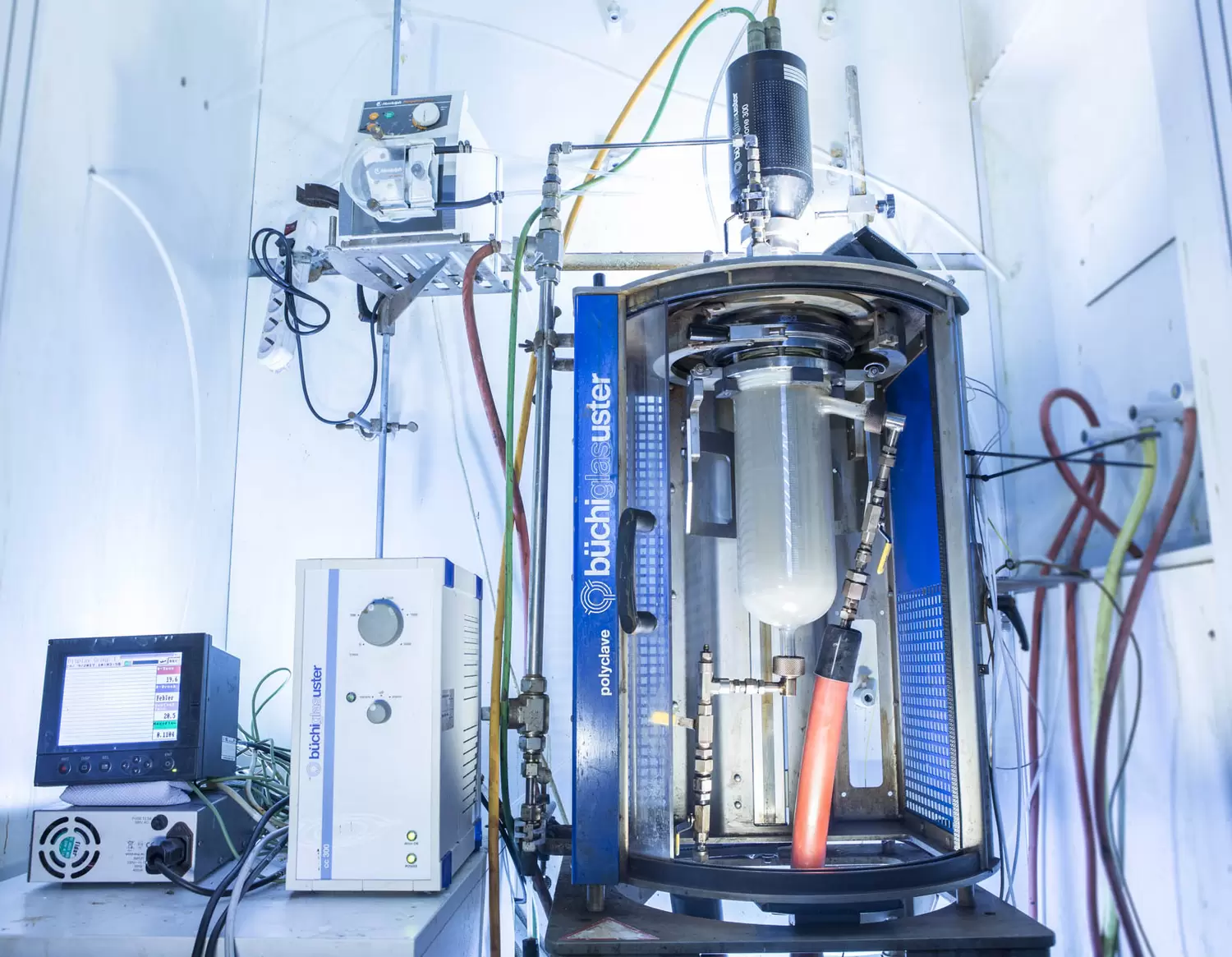
pressure can be determined in the pressure reactor.
Chemical wet analysis and quality control
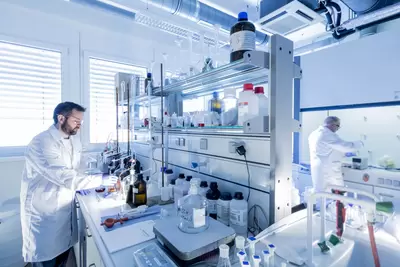
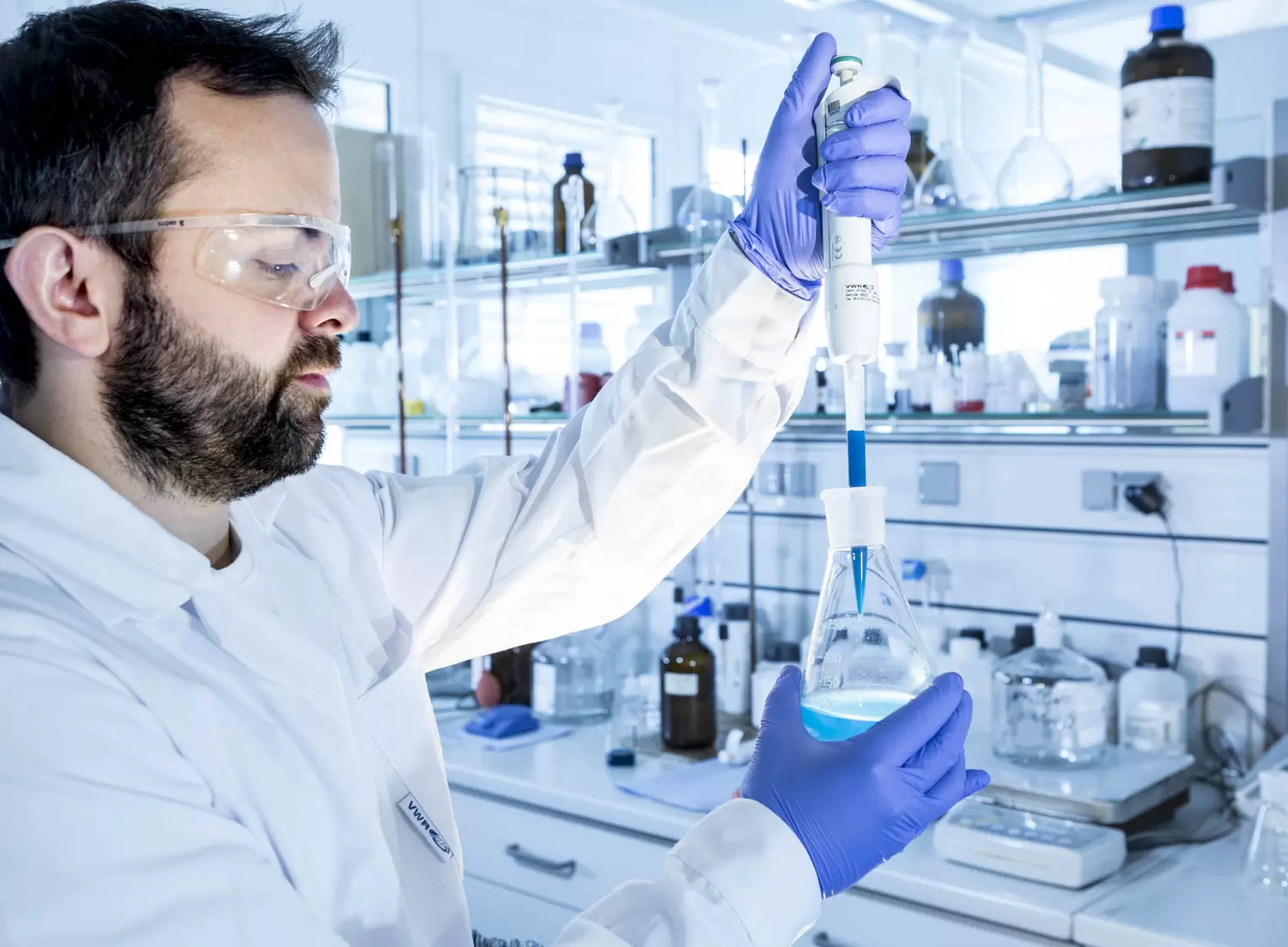
The chemical substances required by the various processes going on in strip processing lines can be meticulously analyzed in the lab. A very important analysis is the determination of the metal content in pickling liquor. Also cleaning water and waste water are analyzed, for example, to determine the content of certain ions. Volumetric analyses of samples can be performed by manual as well as semi or fully automatic titration.
Pickling tests
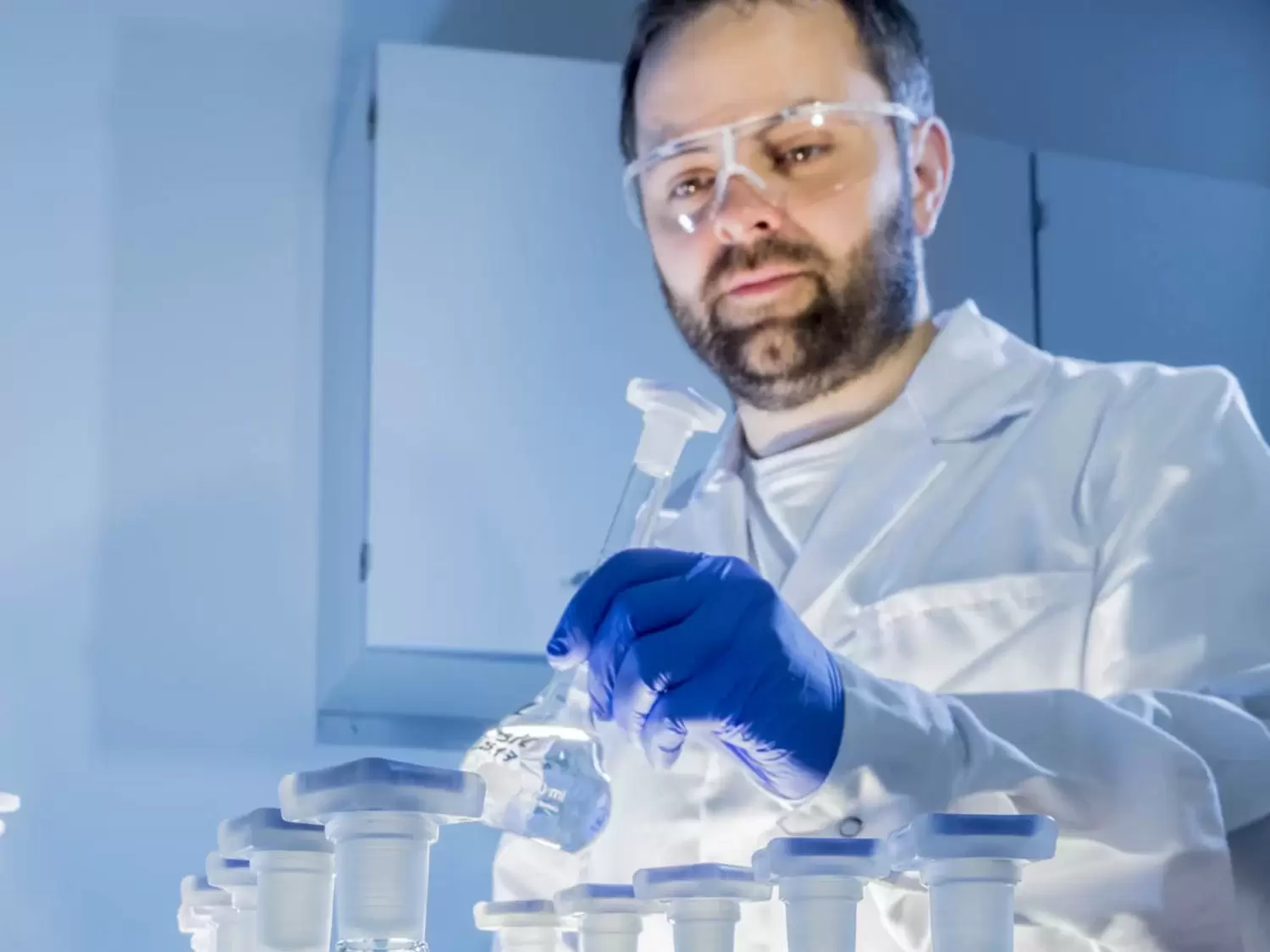
In strip processing lines, pickling – i.e. the removal of oxides, so-called scale, from the metallic surface - is a central process step. The pickling process is influenced by the intensity of scale formation, which in turn largely depends on the material and the cooling process after hot rolling. Whenever materials and upstream processes change, process parameters have to be re-evaluated and verified anew. In the lab, pickling tests can be performed with sheets or wire rod. Depending on the metal (steel, stainless steel, aluminium), inorganic acids or special mixed acids can be used as pickling medium. It is possible to simulate both turbulent and electrolytic pickling processes.
Analysis of trace elements and quality control
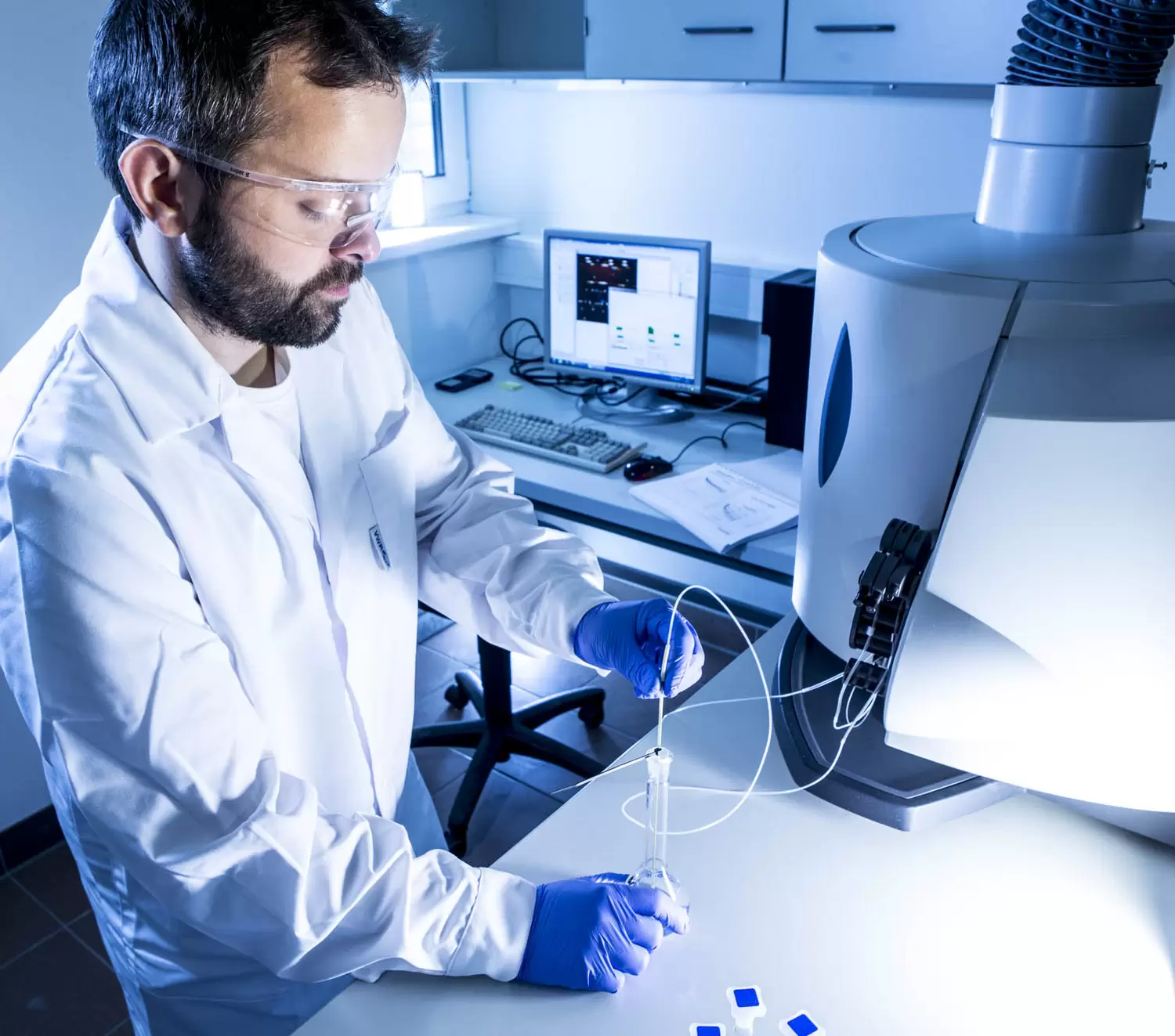
Trace analysis of ores and alloys is performed with ICP-OES (Inductively Coupled Plasma - Optical Emission Spectrometry) instruments. This method provides the possibility to analyze up to 60 trace elements and determine the exact composition of the examined materials and the purity of end products, intermediate products or input material.
Sedimentation analysis and process optimization
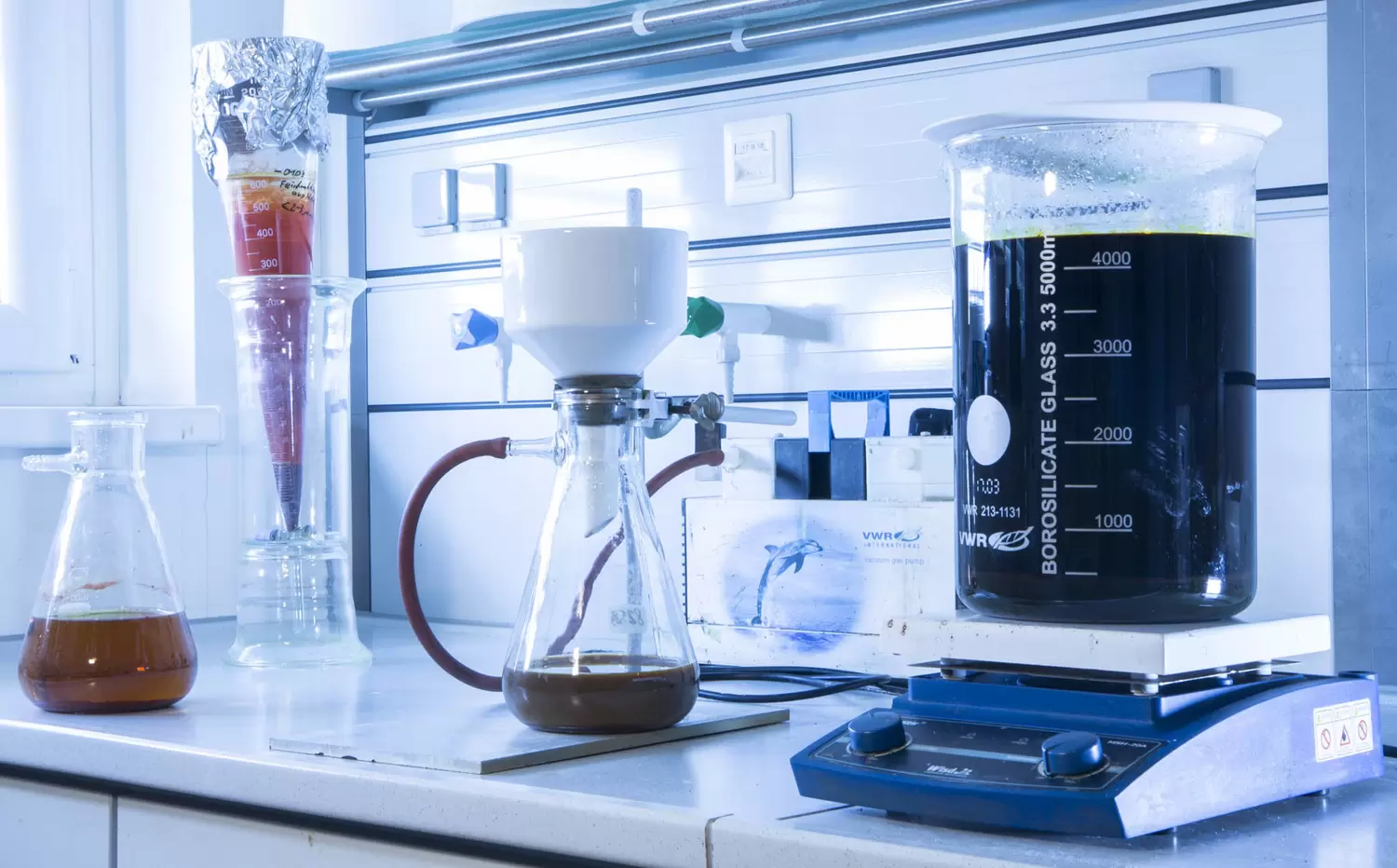
The analysis of the sedimentation behavior of process fluids is an essential analytic technique to optimize the processes in processing plants. Such analyses provide essential information about the relevant sedimentation parameters such as sedimentation time and quality. The sedimentation behavior is particulary important for pickling liquors, process water and waste water and for precipitation processes and reactions.