The steel industry is under growing pressure to drastically reduce its CO2 emissions. Alongside political goals such as the European Green Deal or the Inflation Reduction Act in the United States, stricter environmental standards mean that immediate action needs to be taken. In the US, the threshold value for fine particulate matter (PM 2.5) was recently lowered to an annual average of 9 µg/m³. In particular, this is forcing operators of gas-fired plants to rethink their approach: The focus is shifting not only to NOx emissions from combustion processes but also to Scope 1 direct CO2 emissions.
Against this backdrop, the subject of galvanizing is particularly relevant. Hot-dip galvanizing is one of the most energy-intensive procedures in the downstream process, as the heating systems used in galvanizing lines remain a major source of emissions. Analyses conducted by SMS group show that, with gas-fired conventional process control, around 108 kg of CO2/t of galvanized steel are generated solely from direct emissions. When fossil fuels are consistently replaced by electrical heating technologies, this figure can be reduced to 15 kg/t.
Economic and strategic factors also come into play. Plant owners not only reduce regulatory risks and the work and expense involved in obtaining licenses and permits, but they also gain vital competitive advantages. With fossil-free galvanized products, they offer their customers a measurable differentiating characteristic in sustainability-driven markets, particularly in the automotive and household appliance sectors. At the same time, volatile natural gas prices can be avoided – an essential factor when it comes to predictable, stable operating costs.
This technological transformation is already underway: The first fully electrically heated galvanizing line is currently being built for Stegra in Sweden, and SSAB has also committed to this path by implementing fully electric furnace concepts for both a CGL and an AGL.
Why electric furnace technology is setting new standards
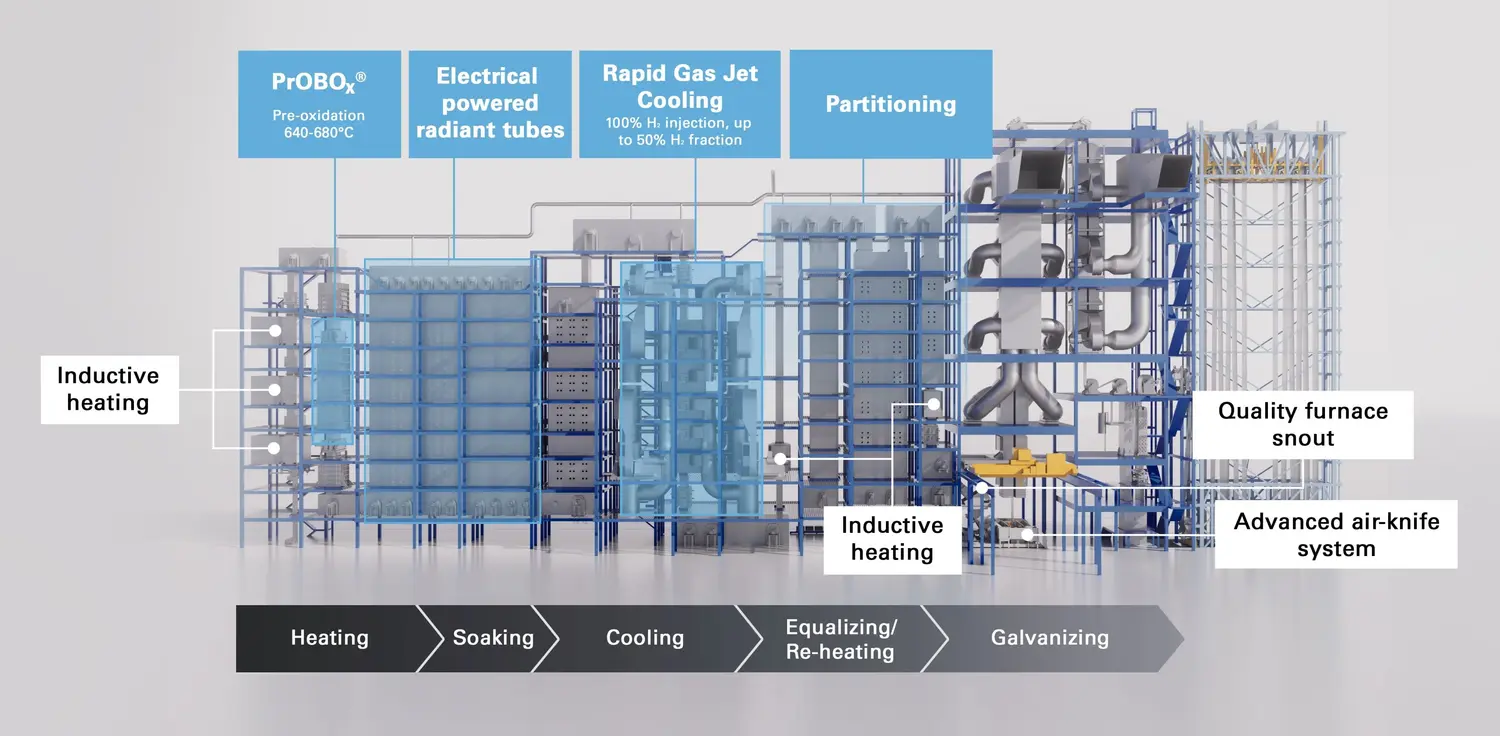
To avoid direct emissions from galvanizing processes, SMS group has developed a completely fossil-free heating technology for continuous galvanizing lines (CGL) and pickling and galvanizing lines (PGL). The system is based on two well-established, electrically operated components: the induction heater and electrically heated radiant tubes. Both technologies have been tested in industrial environments and compared with gas-based solutions in terms of temperature control, service life, and energy efficiency.
The electric furnace concept combines fast temperature control with homogeneous heat distribution. The induction heater provides the initial rise in strip temperature to 670 °C. The thermal pulse takes place directly in the material, which allows changes in the strip thickness or steel grade to be quickly compensated for. This results in more stable process windows, lower transition losses, and more flexible production changes.
Electrically heated radiant tubes are used for the subsequent holding and heating phase up to around 850 °C. These were specifically developed to meet the demands of galvanizing lines, including numerical design, material tests, and load simulations. The crucial factor here was to ensure that the performance and service life are comparable with those of gas-fired W-tubes.
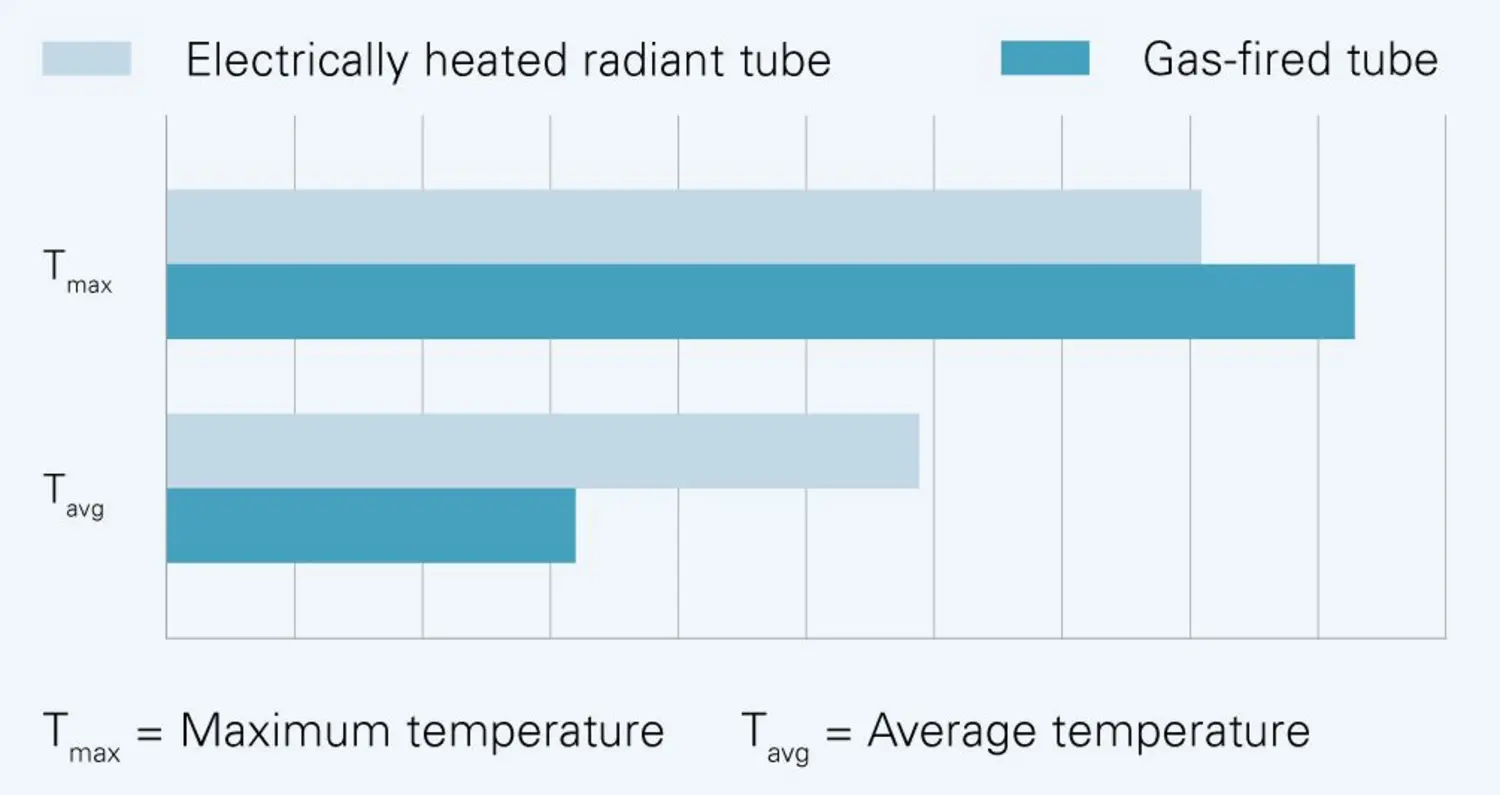
Practical applications show that three electrically operated I-tubes can fully replace one gas-fired W-tube. Due to the higher thermal efficiency – up to 98% compared to approximately 75% for gas – an installed power of 3x 40 kW is sufficient to obtain the same thermal value as for a gas burner operating at 160 kW. At the same time, the maximum surface temperature remains lower, which reduces material stress as well as the need for maintenance.
The homogeneous temperature distribution across the tubes not only increases the quality of the heat transfer but also enables the process to be more precisely adapted to the relevant product profile. Numerous simulations and series of measurements carried out by SMS group demonstrate these advantages. The power control of the electrical elements is infinitely variable, and the response times are short. In contrast to gas-powered systems, the input of heat is also independent of the emission behavior of the strip concerned.
As a result, operators have at their disposal a technologically sophisticated heating system offering clear advantages in terms of quality, efficiency, and emissions balance, without having to compromise on performance, flexibility, or service life.
Decarbonized galvanizing not only means avoiding emissions but also reducing operating costs and controlling production processes more flexibly. Investing today provides reliable regulatory predictability and strengthens competitive positioning.
From vision to solution
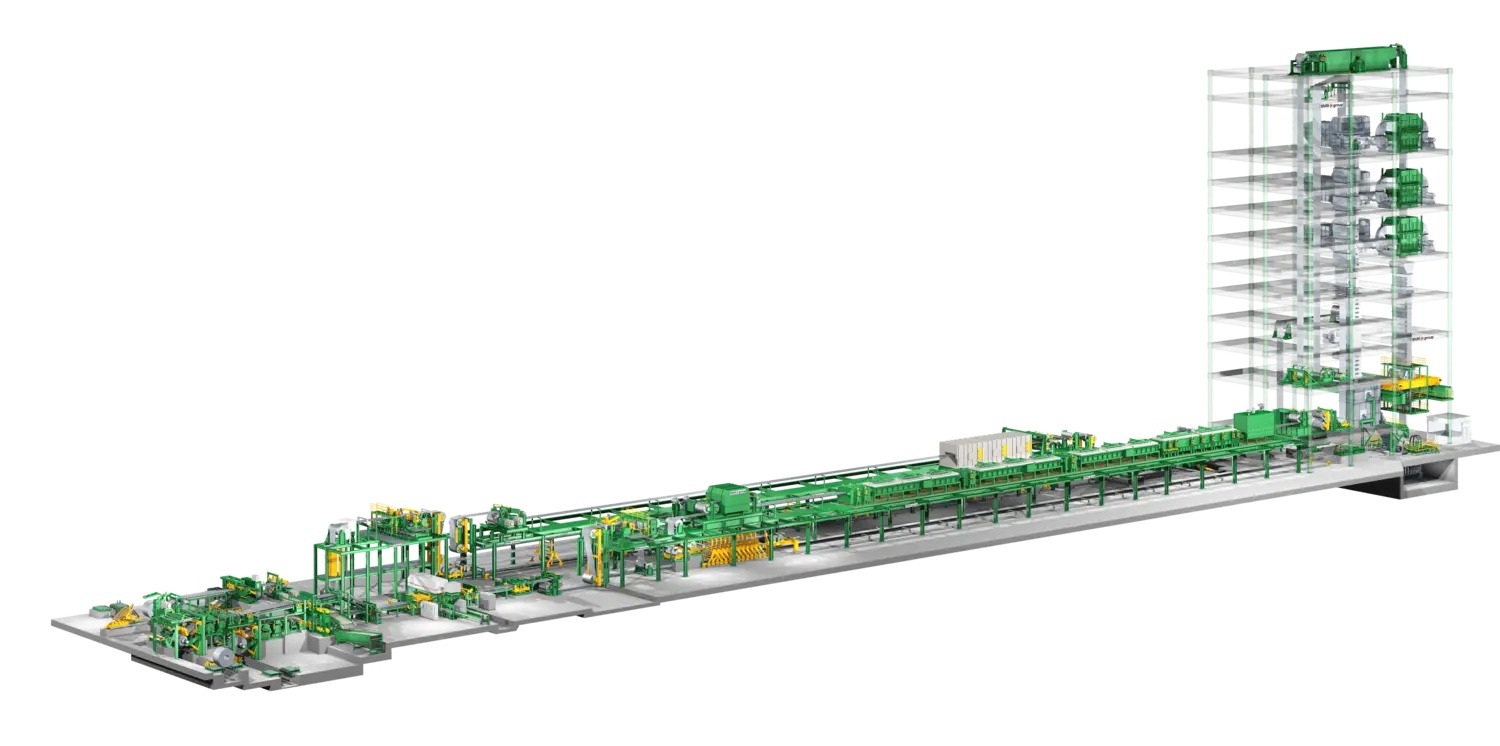
The first galvanizing line that runs entirely without fossil fuels is currently under construction as part of the new green steel complex for Stegra. In addition, SMS group is also implementing fully electric furnace technologies for SSAB as part of a new cold‑rolling and strip‑processing complex that includes both a continuous galvanizing line (CGL) and a continuous annealing and galvanizing line (AGL). Both projects are designed with the demands of emission‑critical industries in mind, particularly the automotive and white goods sectors, and cover a wide spectrum of steel grades — from standard grades and IF (interstitial free) steels to high‑strength and advanced high‑strength steels (AHSS) with tensile strengths of up to 1,500 MPa.
In addition to emission-free operation, the lines boast a number of operational advantages. The combination of induction and electric heating tubes enables flexible production with fast product changes, short heating times, and precise temperature control, even when there are changes in strip thickness or grade. By contrast with conventional plants, production can be resumed in less than two hours after a shutdown. This reduces downtimes and improves plant availability.
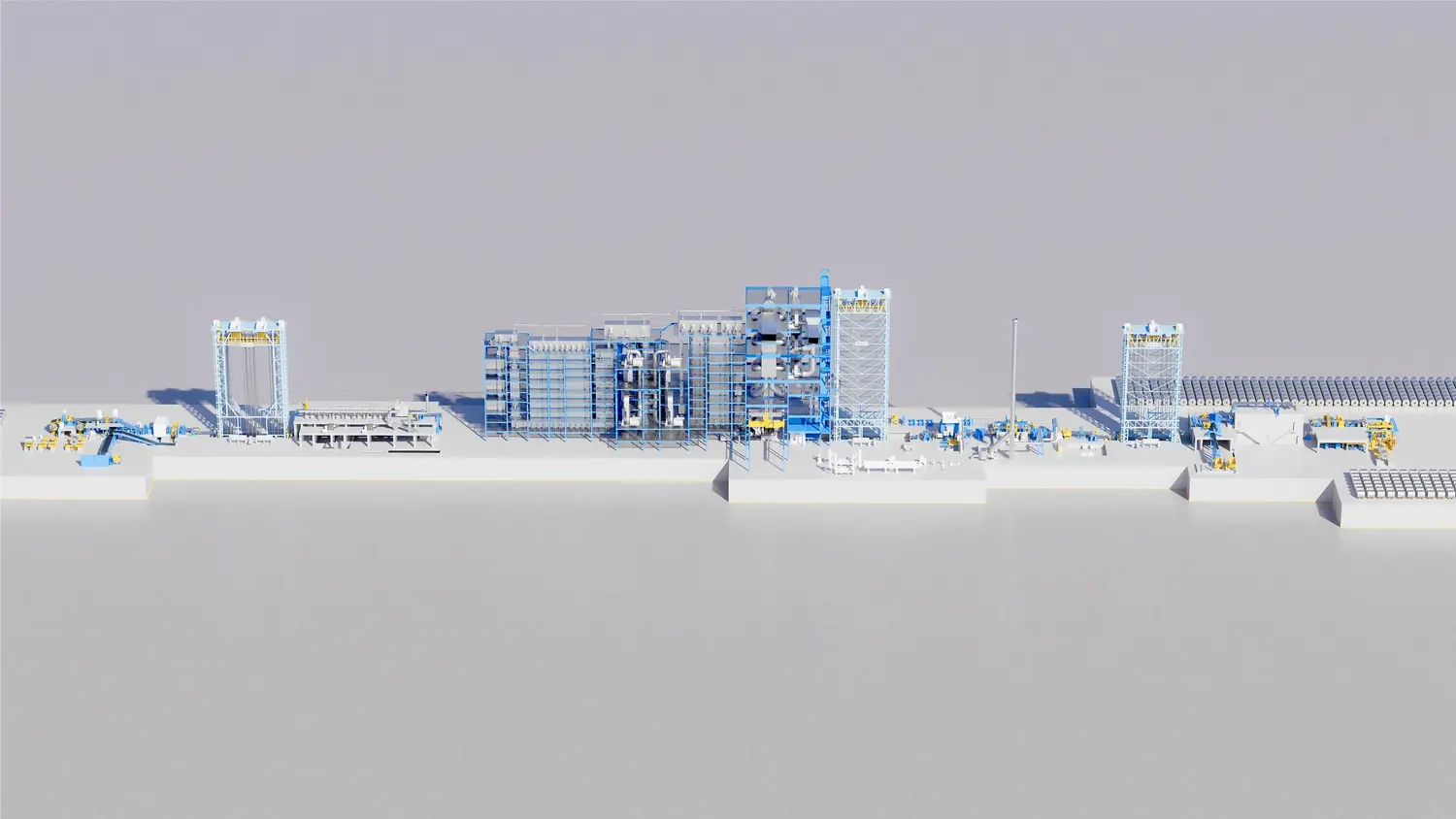
Hot strip galvanizing
Pickling and galvanizing lines represent another field of application for electrically heated galvanizing systems. The direct pickling and galvanizing of hot strip significantly reduces energy consumption, as the work-intensive cold rolling stage is no longer required, and cuts emissions from in-house processes (Scope 1) and purchased energy (Scope 2). Moreover, heat-to-coat processes run with significantly lower temperature requirements. Electric induction heating has also proven its worth here, especially for thickness changes ranging between 0.8 and 6.5 mm. Thanks to the low thermal inertia, transition losses can be minimized and production processes can be controlled more efficiently.
Benefits
- Reduction of emissions to a legally sustainable level, without the need for compensation measures
- Future-proof investment in a technology that meets international environmental standards
- Strengthening of market position through sustainable products with a documented CO2 balance
- Planning reliability with regard to energy supplies, operating costs, and permit procedures