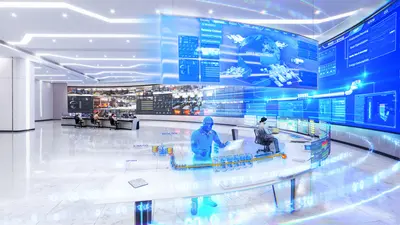
In the metals industry, artificial intelligence (AI) is poised to accelerate the digital transformation by making advanced technologies more accessible and intuitive for a broader user base. From coding support to autonomous process optimization, AI is reshaping how steel and metal making plants are designed, operated, and maintained.
“We see that AI’s role is expanding along two axes: It is getting deeper and wider at the same time,” says Thiago Maia, Executive Vice President Automation, Digital and Service Solutions at SMS group. In terms of depth, advanced AI models are enhancing the precision of simulations and the effectiveness of control systems. New computational capabilities enable the use of more process parameters, allowing models to become more effective and more robust, enabling the real-time optimization of metallurgical processes.
In terms of width, AI’s reach is expanding as it breaks down internal silos. Integrated models now span multiple production stages, enabling:
- Cross-process optimization, where upstream and downstream parameters are jointly considered
- Scenario-based planning, allowing simulations to evaluate alternative execution strategies
- Holistic energy management, reducing energy consumption, carbon footprint, and operational costs.
“AI is not just another tool – it’s a transformative force that redefines how we approach industrial automation,” Thiago Maia adds, “it enables us to shift from reactive operations to proactive, comprehensive decision-making.” Large language models (LLMs), which excel at understanding natural language, are particularly impactful. Their ability to interpret and generate human-like text makes them powerful tools for programming, documentation, and communication. These generalist models are rapidly permeating industrial activities, while specialized AI models continue to evolve to tackle complex engineering and operational challenges.
Beyond language, other foundation models for images, video, and sound enable integrated machine vision, speech recognition, and content generation. As these generalist models become more mainstream, the next phase will be the deployment of engineering-specific AI, with models capable of understanding and generating electrical designs, mechanical layouts, as well as piping and instrumentation diagrams, to name but a few.
Whether by improving our own productivity or by optimizing our customers’ operations, AI will continue to change the industry in the years to come.
Viridis Dispatch: Optimized gas balance
Our main focus when applying AI is to integrate it into products and to help customers to enhance productivity, reduce costs, increase quality, and develop new grades. Another goal is to lower the energy and carbon footprint, a challenge that is effectively tackled by Viridis Dispatch, a software designed to optimize the gas balance in integrated steel plants and help operators make the most appropriate decisions. In integrated mills, blast furnace gas (BFG), coke oven gas (COG), and converter gas (BOFG) are used as fuel for electricity generation, reheating furnaces, sintering, pelletizing, and calcination among others. The optimal dispatch of steelmaking gases is difficult because the generation process is highly variable and tightly coupled to upstream metallurgical operations, while multiple heterogeneous consumers require different flow rates, different calorific values, and all interdependent decisions must respect gasometer, pipeline, turbine, and safety constraints. Consequently, reliable operation demands accurate forecasting, fast simulations, and the evaluation of different operational perspectives to be effective.
Viridis Dispatch addresses these challenges by applying AI in all steps of the optimization process. To increase the quality of the gas generation forecast, machine-learning time-series models were developed to predict the generation of gases, the consumption of gases, the alternatives for mixing gases, and the use of substitutes across process areas. Then, AI-informed simulation models performed mass and energy balances for the whole plant, accounting for details such as gasometer levels or mixed-gas compositions, so each decision could be evaluated against operational constraints (e.g., gasometer limits, pipeline flow limits, and turbine stability). These simulations provided fast, realistic assessments of whether potential actions would violate constraints within the forecast horizon. Then, a heuristic multi-objective optimizer used the forecasts and scenario simulations within a rolling horizon plan to identify economically and operationally optimal dispatch decisions. By combining forecasts, simulations, and optimization, the AI-enabled Viridis Dispatch resulted in a measurable 17% reduction of natural gas consumption and associated CO2 reductions, while substituting manual decision-making for autonomous, closed-loop control for a large-scale steel site.
BlueControl: Optimization of metallurgical processes
BlueControl is an AI-supported real-time process-control and optimization platform developed by SMS group for metallurgical processes, initially tried and tested in non‑ferrous plants and earmarked for a broader range of applications with other metals. It combines rigorous physical/thermodynamic simulations with deep‑learning and surrogate‑model techniques to produce fast, physically consistent predictions for multi‑step metallurgical processes from melting in a tilting refining furnace to oxidation and reduction, enabling on‑the‑fly optimization of feed mixes, fluxes, tap‑to‑tap times, product quality, and emissions while supporting operator HMI visualization and KPI tracking.
The architecture leverages accurate physical models to generate training data and then trains surrogate models (metamodels) so that optimization routines can evaluate operating scenarios in seconds rather than hours or days, making real-time control and optimization feasible during production. A prototype was successfully tested at a customer’s facility. The product roadmap targets expanded plant types and potential performance-based service offerings. BlueControl also enforces physics consistency by integrating thermodynamic information into machine-learning outputs to avoid physically impossible predictions.
EAF: Tap hole blockage prevention
Another example is the tap hole blockage prevention solution for electric arc furnaces (EAF). The objective was to address the issue of premature failure of the tap hole. Conventional techniques had failed, so it was time to utilize a new approach: In the given customer use case, the tap hole only lasted 20 to 50 heats instead of the industry standard of 100 to 150. The occurrence of blockages, requiring frequent lancing with an oxygen pipe, was a contributing factor to the premature failure. Our aim was to improve the tap hole’s lifetime and minimize the need for lancing. A predictive analytics system that could assess the risk of tap hole blockages during a heat was developed, enabling a root cause analysis to identify influential factors.
The dataset consisted of approximately 1,000 signal readings from the EAF across 8,000 heats, with a resolution of one sample for every 200 milliseconds. We deployed machine-learning models to cluster tap hole blockage events into distinct segments. These segments revealed key behaviors deviating from the norm, potentially contributing to blockages. We developed a predictive model to quantify the risk of a tap hole blockage by integrating the risks associated with each segment. Afterward, we utilized visualization tools to highlight the behavior of signals associated with the highest-risk segment. This facilitated an in-depth understanding of the contributing factors and supported decision-making for process improvements. For our customer, we were able to increase the rate of flawless tapping from around 80 to over 94%.
Looking ahead, the vision of a fully autonomous, AI-operated steel plant is within reach. At every step, AI will bringmore productivity gains and better operational results and will enable a gradual transition of workforce roles – from direct operations to supervisory tasks, from routine execution to exception handling, from hazardous environments to safer oversight positions.