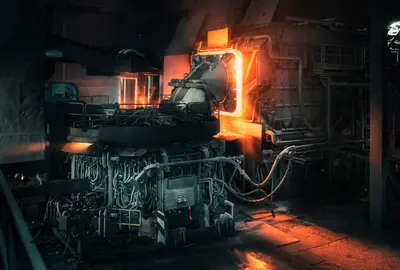
The development and testing of the burner was part of an EU-funded, collaborative initiative coordinated by RINA, an Italian company providing independent testing, inspection, certification, and engineering consulting services and supported by partners including SMS group, Nippon Gases, RWTH Aachen University (Germany), steelmakers Pittini (Italy), CELSA Group (Spain), and AFV Gruppo Beltrame (Italy). The objective of the project, “Developing and Enabling H2 Burner Utilization to Produce Liquid Steel in Electric Arc Furnaces- DevH2forEAF- GA number: 101034081,” was to create and demonstrate a robust multi-fuel burner capable of transitioning from natural gas to 100% hydrogen, enabling electric arc furnaces (EAF) to utilize hydrogen as a primary or supplementary fuel to reduce direct CO2 emissions during the steelmaking process.
SMS group led the burner design, coupling thermodynamic, and kinetic modelling with advanced CFD (computational fluid dynamics) simulations to ensure optimized combustion as well as mechanical and thermal resilience under harsh EAF conditions.
Navigating the path to success
The validation program began at the RINA experimental combustion station in Dalmine, Bergamo (Italy). Tests progressed from 1 to 3 MW and hydrogen fractions from zero to 100%, assessing the burner’s operational stability, flame behavior, heat transfer, and response under controlled conditions. This stage validated the predictive models and informed industrial trial parameters, laying the groundwork for scalable implementation in production environments.
At the end of October 2024, the initial industrial demonstrations took place at Ferriere Nord of Pittini Group in Osoppo, Italy. Over two full days, the burner operated smoothly while hydrogen content ramped rapidly from zero to 100% at around 3 MW, with some sessions at 4 MW. Several heats were melted using the SMS H2 burner alone, while other burners were switched off, providing a direct comparison of hydrogen operation against conventional firing. The tests confirmed mechanical as well as thermal resilience and demonstrated stable performance during actual EAF operations, including rapid fuel switching and steadfast flame stability.
Ferriere Nord’s tests produced valuable operational data for refining control strategies, fuel management, safety protocols, and hydrogen logistics within an industrial melt sequence. The results reinforced confidence in the burner’s practicality for routine production and reinforced the collaboration’s trajectory toward broader deployment.
Building on these results, the April 2025 tests at CELSA Group in Barcelona validated industrial-scale performance in another real EAF setting. The SMS H2 burner operated for two days, delivering more than 4 MW of power and executing seamless transitions from natural gas to 100% hydrogen. The Barcelona tests confirmed that hydrogen-capable burners are ready to be deployed in commercial production environments, provided that site-specific integration matters are addressed.
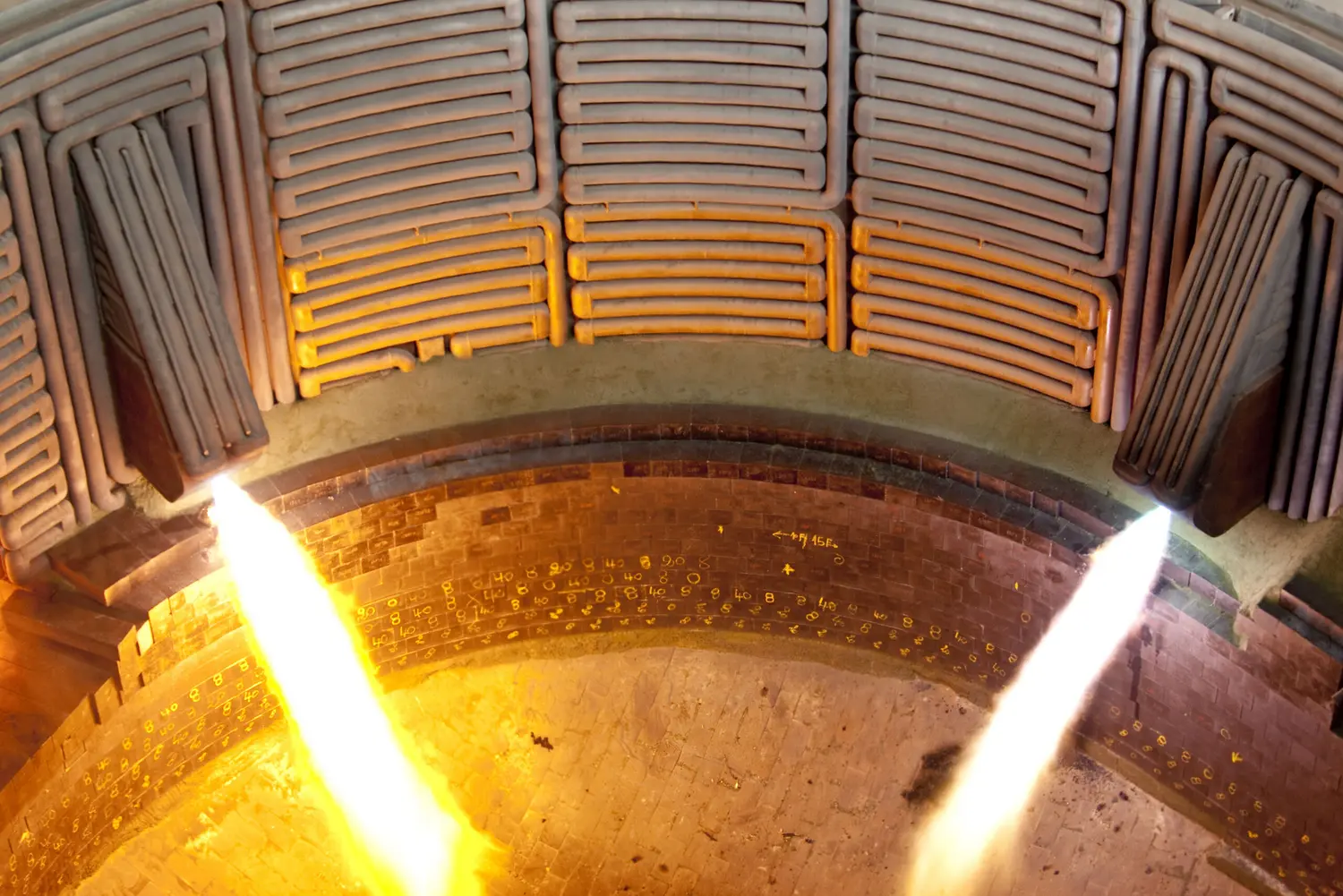
Implications for green steelmaking
The industrial demonstrations mark a critical step toward decarbonizing electric steelmaking. Integrating hydrogen-capable burners into EAFs enables significant reductions in CO2 emissions associated with fossil fuels while preserving plant flexibility and productivity. For producers pursuing green steel objectives, the SMS H2 burner provides a practical, scalable path to hydrogen integration without furnace redesigns. The burner technology supports progressive hydrogen adoption, accommodating supply variability and enabling the use of low-carbon hydrogen when available, all while maintaining operational integrity and performance.
The multi-fuel capability also supports pragmatic transition strategies: Steelmakers can blend hydrogen progressively, optimize fuel costs, and mitigate risks during the energy transition. Moreover, industrial deployment offers a platform to build experience in safety, logistics, and process integration that is valuable for broader sector adoption. With lab validation and two major industrial campaigns completed, the technology readiness of the SMS H2 burner has taken another leap forward.
Hydrogen combustion in production EAFs is technically feasible, safe, and executable in real plants, fully validated for different levels of rated power. SMS group has moved beyond concept validation, offering a real option for steelmakers to accelerate decarbonization and embrace the hydrogen era in electric steelmaking.
Highlights
- Wide power level capability: validated operation from laboratory 1 MW up to 4 MW in industrial contexts, with efficient heat transfer and proven functionality for all hydrogen fractions.
- Full fuel flexibility: seamless, controlled transition from natural gas to 100% hydrogen without compromising combustion stability or flame efficiency.
- Robust design: burners and ancillary systems demonstrated mechanical and thermal resilience to EAF heat loads and repeated transients in fuel composition and power.