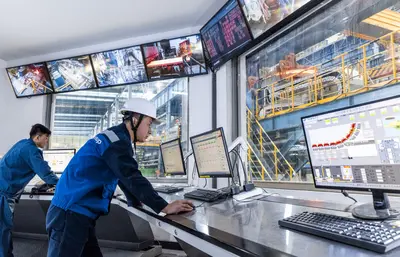
Efficient control and monitoring of industrial plants are essential to ensure high performance and quality. A modern dashboard is an indispensable tool in this regard, providing a clear representation of complex information and supporting informed decision-making.
A dashboard is comparable to a car’s instrument panel: it graphically displays relevant key figures and data points to provide a quick overview of a plant's current status and performance. Measurement and plant data are utilized to optimize operational processes and identify trends and patterns. The adaptability of a dashboard to individual requirements ensures that only essential information is visible, thereby reducing complexity. This functionality enables users to focus on critical aspects while simultaneously identifying potential risks at an early stage.
Application of the dashboard for slab casters
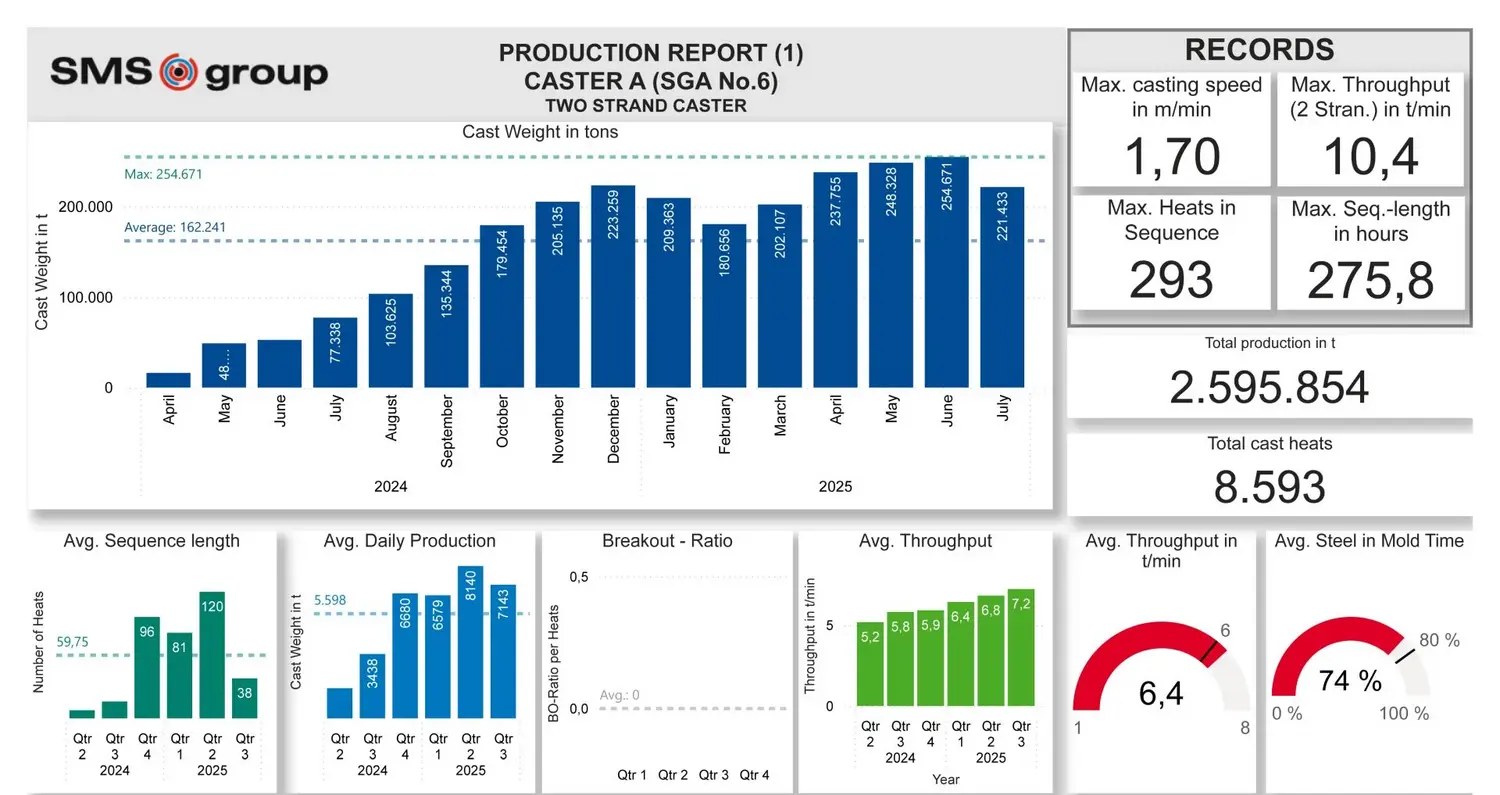
SMS group has implemented a specially developed dashboard for continuous casting plants, which provides critical support during both commissioning and ongoing operations. The dashboard is based on a flexible Windows application programmed with Power BI, drawing data from Level 2 applications. It displays fundamental parameters such as tonnage, format changes and operating times, while also offering detailed analysis functions.
A key feature of the dashboard is the ability to evaluate production history. Users can select a desired time period to analyze plant and process parameters. While product quality cannot yet be displayed directly as a value on the dashboard due to the absence of online data, process parameters such as casting speed and plant utilization rate strongly correlate with product quality and thus serve as indirect indicators.
Benefits and prospects
The dashboard provides SMS group customers with standardized documentation across multiple continuous casting strands. It provides a comprehensive overview of production and allows for quick interventions in case of issues. It’s intuitive usability and precise data representation make it an indispensable tool in modern plant control.
The further development of the dashboard is already underway. In the future, additional data will be integrated to, for example, document the plant's condition in detail. Relevant information such as mold level signals, deviations in segment forces, and drive torques can provide valuable insights into the mechanical and thermal condition of the plant. With these enhancements, the dashboard will become an even more powerful instrument for monitoring and optimizing continuous casting plants.
The dashboard from SMS group is a prime example of integrating modern technologies into industrial production. It simplifies complex processes, supports data-driven decision-making, and enhances the efficiency and quality of continuous casting plants. With the planned advancements, it will offer even more possibilities in the future, further boosting competitiveness and customer satisfaction.